A Trip to Silverton, Colorado to photograph Rosy Finches

On Monday, 22 February 2016, Dwight Frankfather and I traveled to Silverton, Colorado (elevation 9,318 feet, 2,836 m) to look for and photograph the three species of Rosy Finches that inhabit North America. Below are my photographs of all three species including two subspecies of the Gray-crowned Rosy Finch.

The Following information is taken from these websites: The Cornell Lab of Ornithology’s All About Birds, rosyfinch.com, Nature’s Blog – Rosy Finches of Colorado and Wikipedia.

Rosy Finches are songbirds of extreme environments. Due to their remote and rocky habitat above tree-line rosy finches are rarely seen during the summer. Rosy Finches nest at higher elevations than all other birds in North America. During winter and early spring, all three species form large, mixed flocks and often appear in mountain towns and at ski resorts.

Like the other rosy-finches, the Brown-capped Rosy-Finch (Leucosticte australis) is a bird of the high mountains, breeding above timberline. It has the smallest range of the three American species, being found primarily in Colorado.

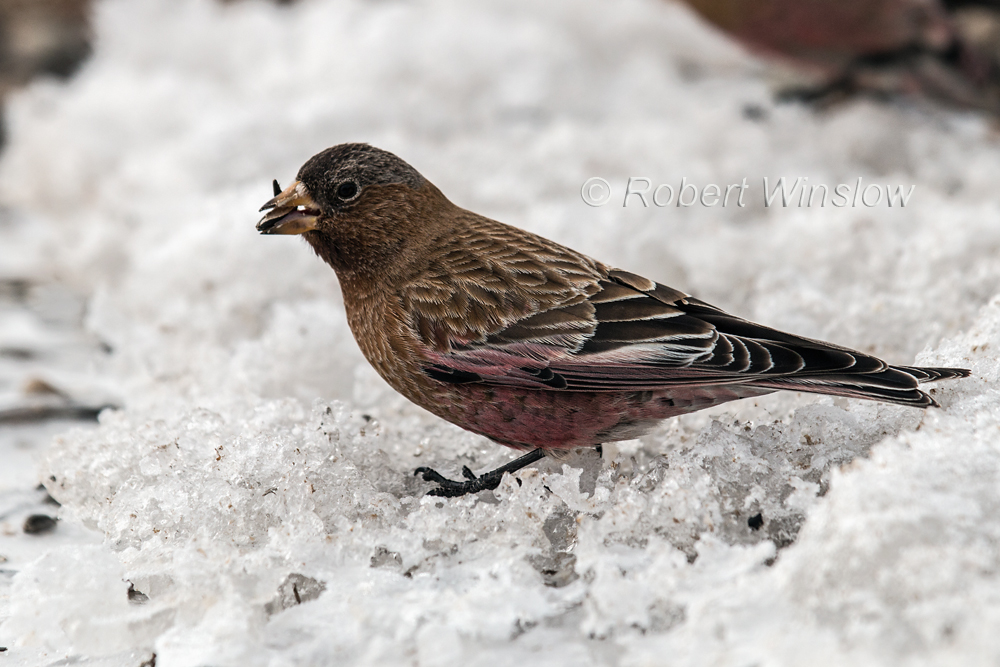
Brown-capped Rosy-Finch 7961W!WM


Brown-capped Rosy-Finch7991W!WM

Black forehead blends into dark brownish crown. Gray head patch usually absent, but some show a light area on the sides of crown that does not extend to the back of head. Males usually have noticeably brighter underparts than Gray-crowned.

Brown-capped Rosy-Finch 7909W!WM

Gray-crowned Rosy-Finch (Interior race, Leucosticte tephrocotis tephrocotis) There is a sharp demarcation between the black forehead and the light gray crown which does not extend very far down the back of head. While plumage is usually a rich cinnamon-brown, some are darker and may be confused with Black Rosy-Finches. Considerably less pink on belly, wings and rump. The Gray-crowned Rosy-Finch is the species most likely to be confused with other rosy-finches. Black Rosy-Finch lacks brown back and breast. Brown-capped lacks gray on head. The amount of gray on the head is variable. Young birds may be especially difficult to separate from Brown-capped in the field.

Gray-crowned Rosy Finch 7882W1WM


Gray-crowned Rosy Finch 7986W!WM


Gray-crowned Rosy Finch 7883W!WM


Gray-crowned Rosy-Finch (Coastal or Hepburns race, Leucosticte tephrocotis littoralis) Differs from the Interior race in having more extensive gray areas on the crown and cheeks. Note contrast between the black chin and light cheeks. Some individuals, possibly first winter birds, may be quite dark on upper back. Like Interior race, the pink on belly, wings and rump is quite subdued.
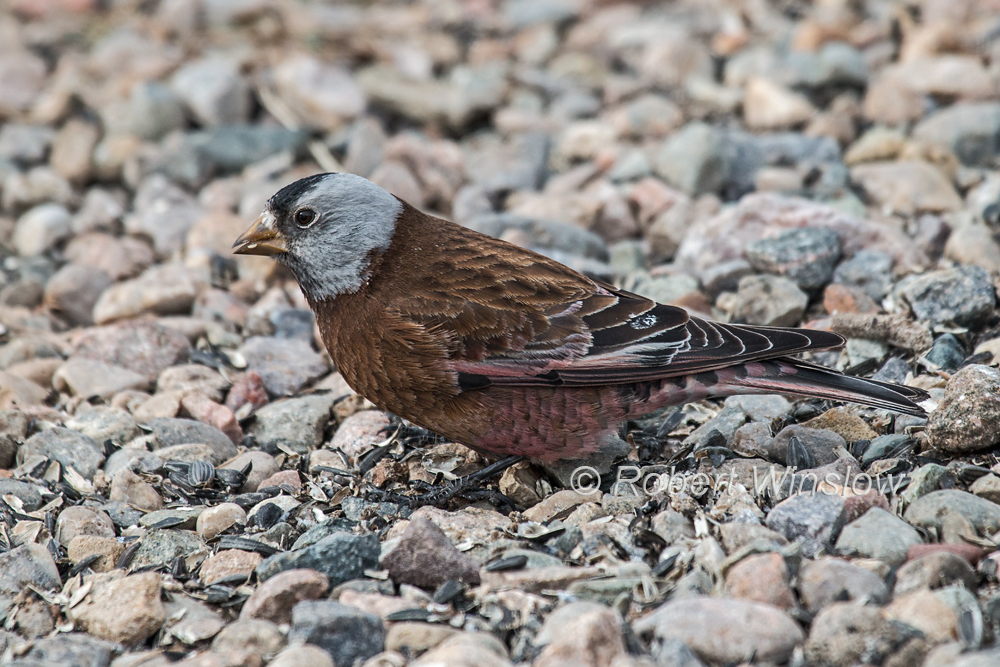
Gray-crowned Rosy Finch 7931W!WM


Gray-crowned Rosy Finch 7976W!WM

Perhaps because of its remote breeding sites, which allow little contact with humans, the Gray-crowned Rosy-Finch seems almost fearless. On its breeding grounds, foraging birds can be approached to within 1-2 meters (3-6 feet).
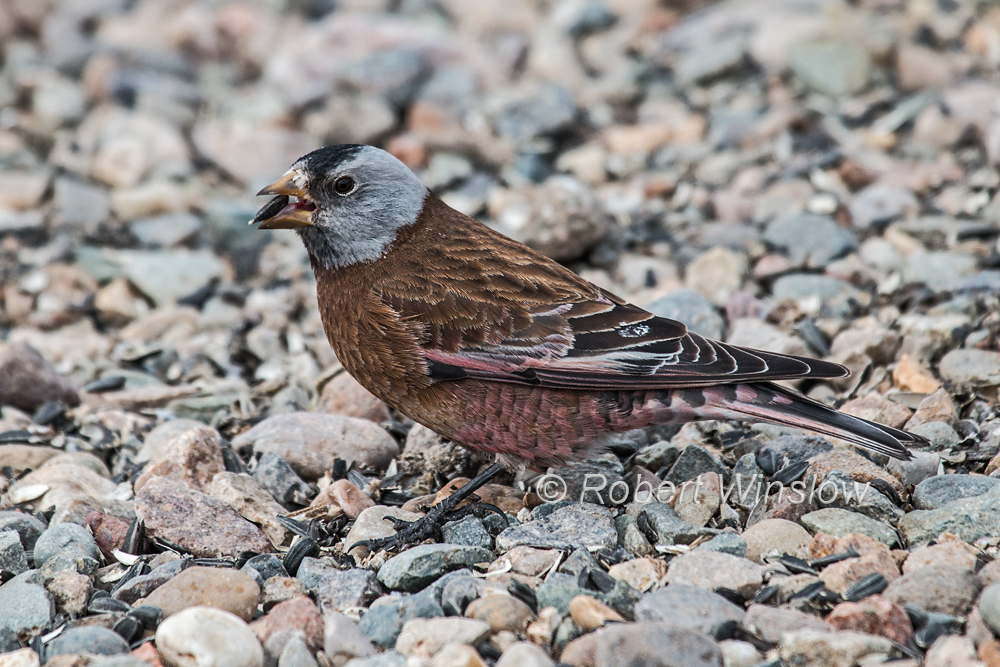
Gray-crowned Rosy Finch 7928W!WM

The Black Rosy-Finch (Leucosticte atrata) is a bird of the high Rocky Mountains. It nests above treeline, among alpine rocks and cliffs and is often the bird that nests at the highest elevation on a particular mountain. Because of this it is one of the least studied birds in North America.

Black Rosy-Finch, Leucosticte atrata, Silverton, Colorado, USA, North America


Black Rosy-Finch, Leucosticte atrata, Silverton, Colorado, USA, North America

Black forehead strongly contrasts with light gray on crown, which extends to back of head. Black back, throat and upper breast contrast with extensive pink on belly, rump and edges of wing and tail feathers. Pink under-tail coverts. Generally has little brown in plumage.

Black Rosy-Finch, Leucosticte atrata, Silverton, Colorado, USA, North America


We also saw flocks of House Sparrows (Passer domesticus)

House Sparrows,  Passer domesticus, Silverton, Colorado, USA, North America


And a trio of fur balls that were interested in anything Avian.
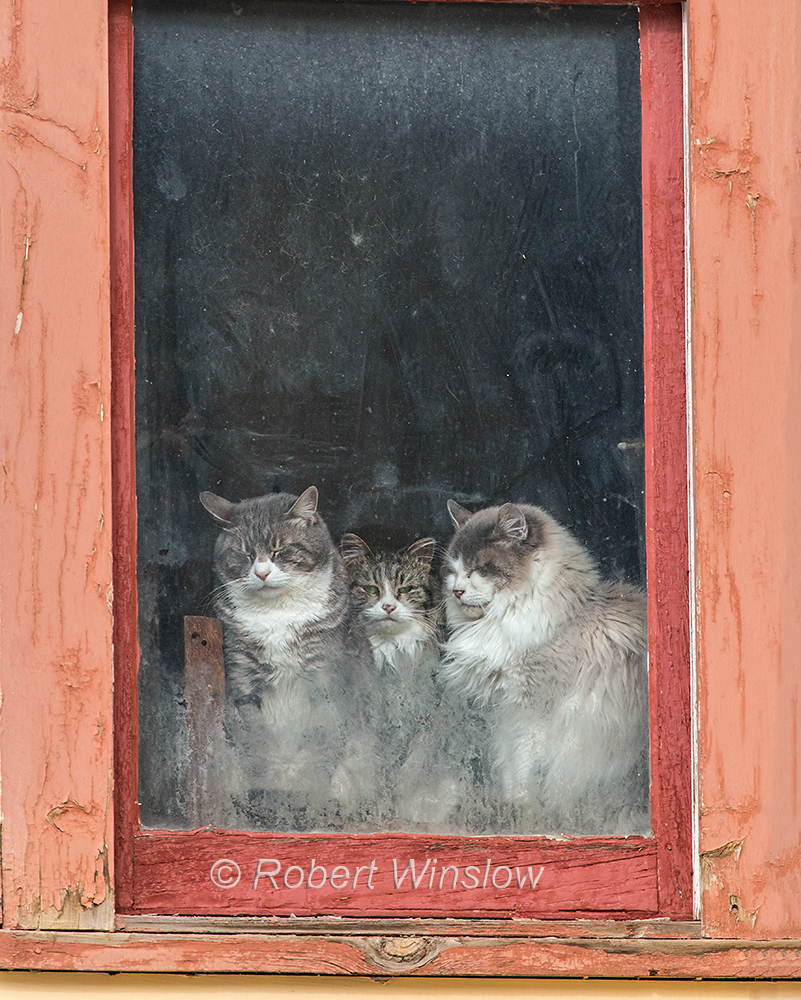
Three Cats in a Window in Silverton; Colorado; USA; North America


Visitors on a Cold Snowy Winter Afternoon

“The ornament of a house is the friends who frequent it.”
Ralph Waldo Emerson

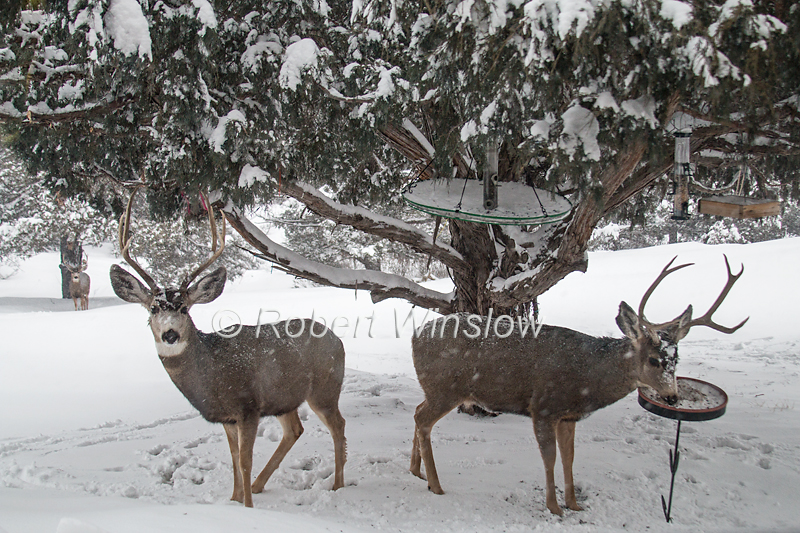
Another Winter storm has arrived and so have the big bucks. They haven’t been here is several weeks. The snow is chest deep for them and I thought they had all gone to lower elevations and the South facing slopes. The does and last year’s fawns haven’t been around for months. The snows are too deep and the food too scarce.

I worry about these guys. It has been a hard Winter for them. Its been cold and the snows are deep. All they are eating are old oak sticks and the low branches of the junipers. I was focused on shoveling the East stairs and around the hot tub making the usual shoveling sounds. When I looked up one of these guys was watching me from about 10 yards away in the shallow snow under Grandmother Tree. “Oh, hello,” I offered and all three took off in explosive bounding leaps.

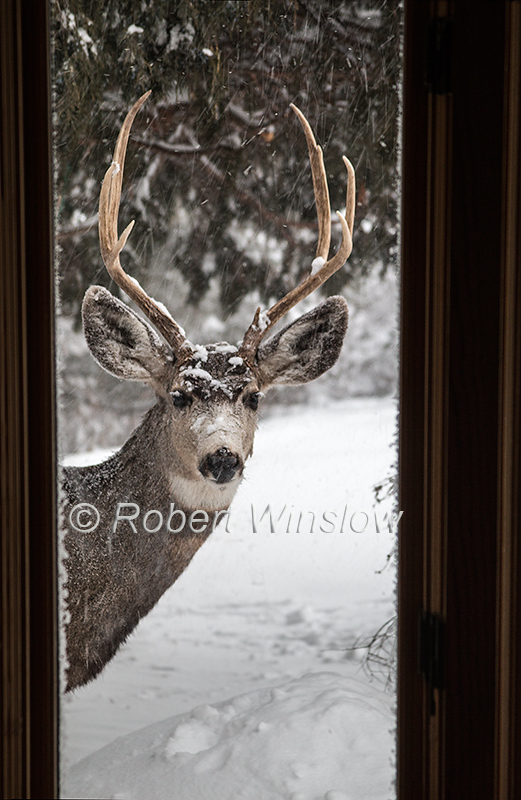
Shortly, the job done, I was back in the house. Within ten minutes big antlers appeared through a window and the first buck had reappeared under Grandmother Tree. They were after bird seed.

I know that it is wrong to feed wild animals. It is illegal.  And harmful if they become dependent on handouts from humans, but I let them eat anyway. Like I said they haven’t been around in several weeks and the Winter is a hard one. Only one buck really ate anything at all and there was still plenty of bird seed remaining when they spooked again. This time they didn’t come back and wandered off to the North pushing through the deep drifts.

Three Bucks in Winter 7184W8WM

Can you see the third deer?

Here he is under another large juniper tree in the background.  The snow is not too deep beneath the umbrella of these trees.

Mule Deer Buck in Winter 7179W8WM

I’d much rather see this through my window than have his head mounted on my wall.

Male Mule Deer Looking in Window in Winter 7189W8WM

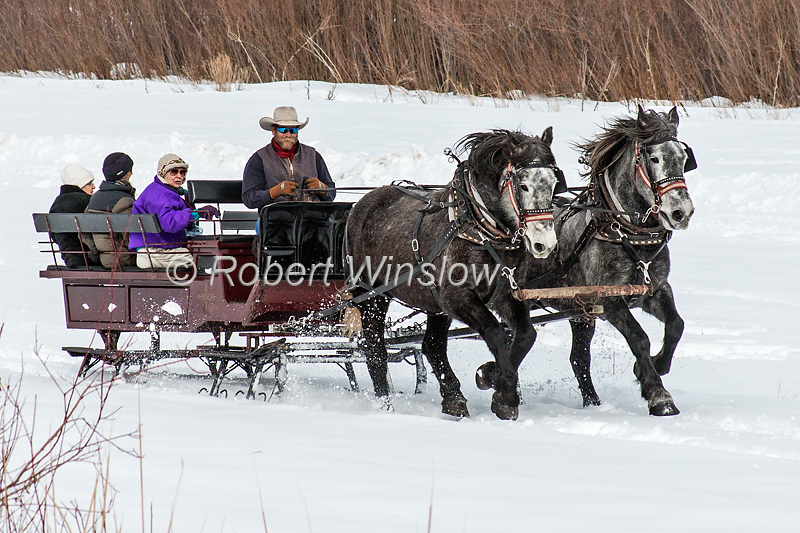
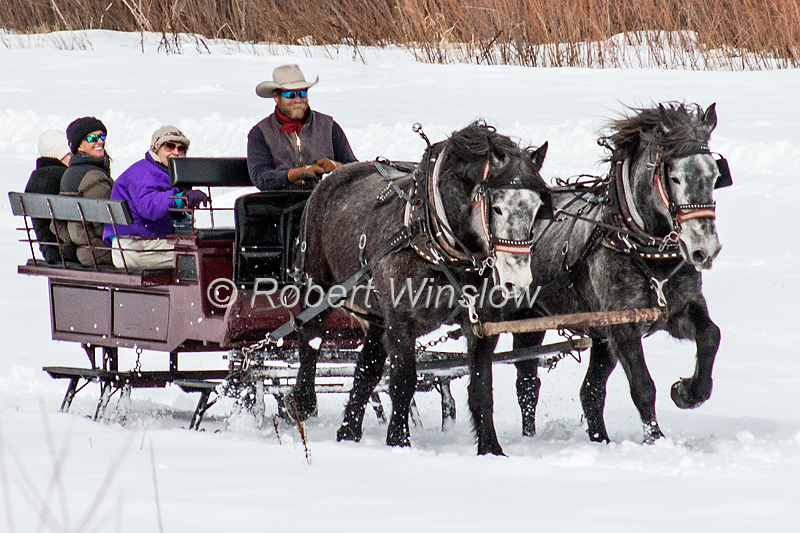
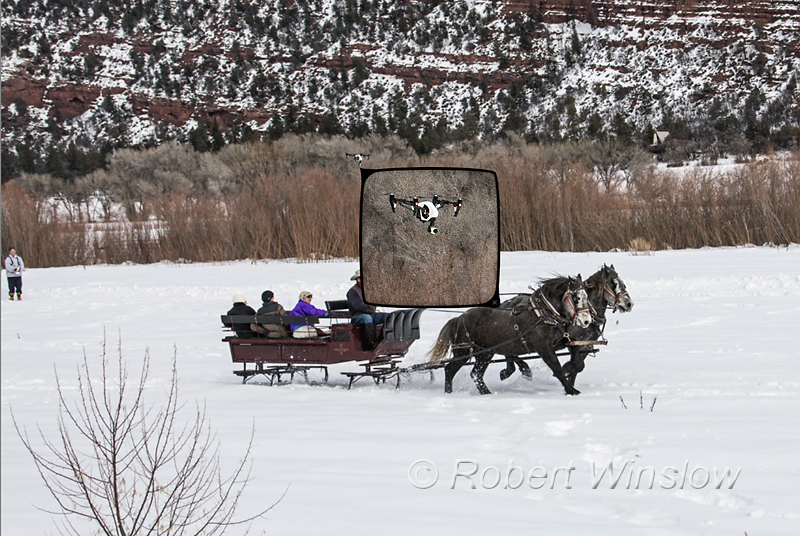
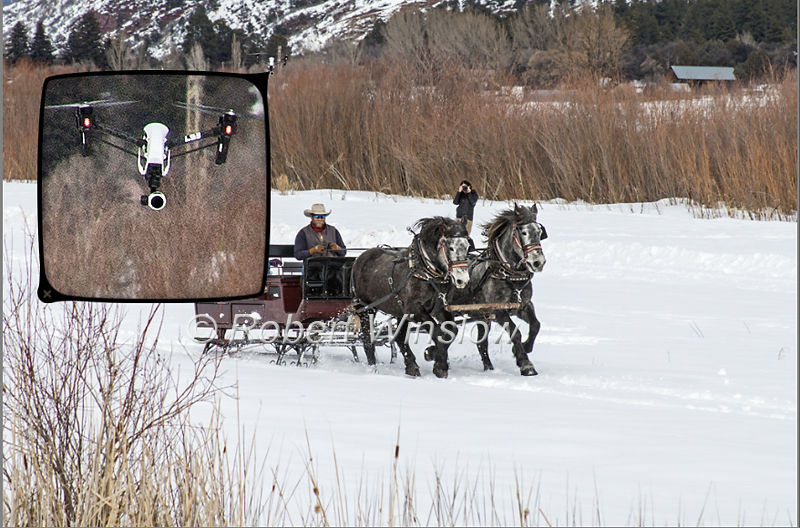
Horses Pulling a Sleigh and a Phantom Drone Overhead

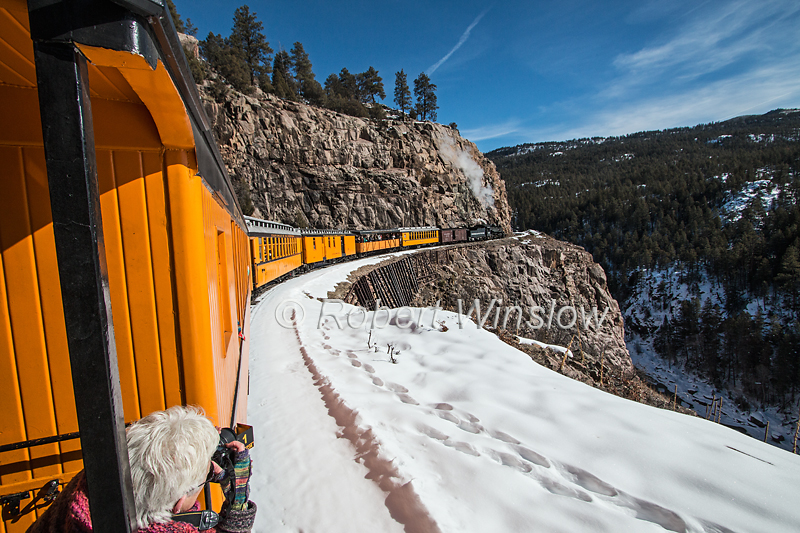
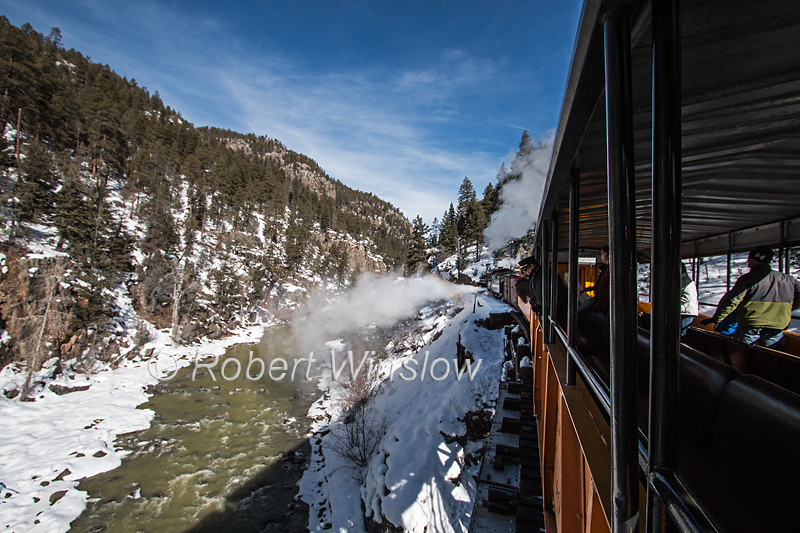
We were given comp tickets for the Durango & Silverton Narrow Gauge RR. On Saturday, along with some friends, Marilyn and I took the Winter train to Cascade Canyon. The weather was fairly warm and we spent most of our time riding in the open car, enjoying the scenery and making photographs.

Karen Photographing the Highline 7701W8WM
Durango & Silverton Narrow Gauge Railroad, Winter Train, San Juan National Forest, Durango, Colorado, USA, North America
Durango & Silverton Narrow Gauge Railroad Winter Train 7722W8WM
Durango & Silverton Narrow Gauge Railroad, Winter Train, San Juan National Forest, Durango, Colorado, USA, North America

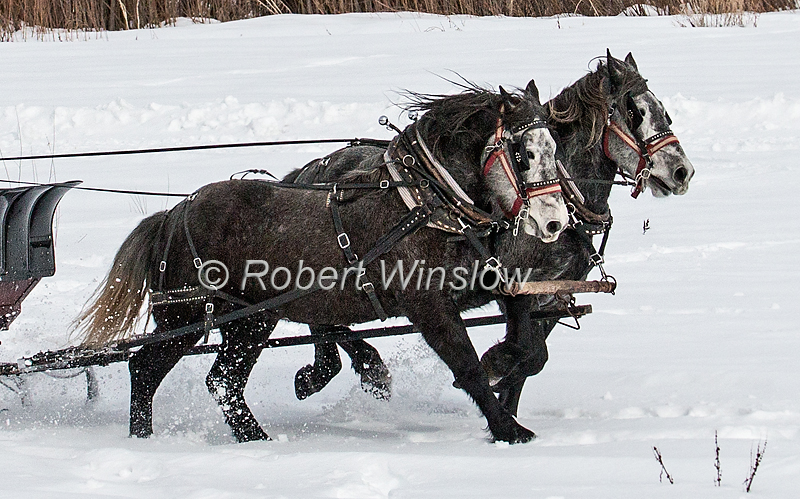
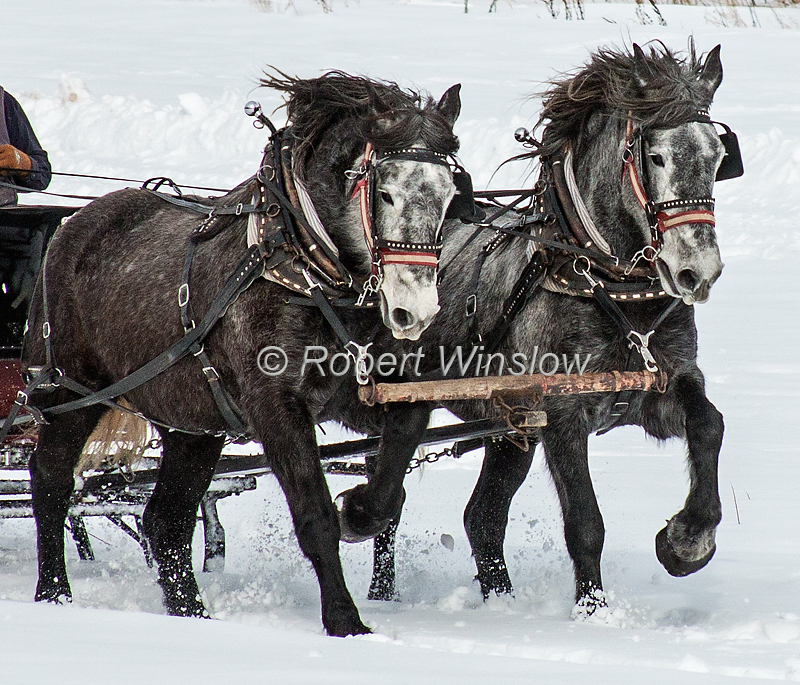
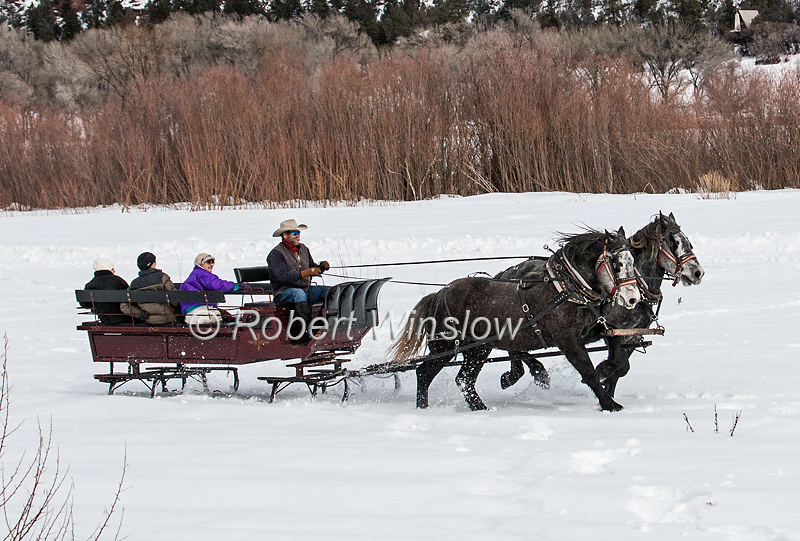
On the way back through the valley, there was a sleigh pulled by two big grey horses.   Apparently, they race the train when it comes by. Here are a few of the photos I took from the train as it was returning to Durango.

Two Horses Running Fast Pulling a Sleigh, Durango, Colorado, USA, North America

I love the close-up images of the running horses.

Two Horses Running Fast Pulling a Sleigh, Durango, Colorado, USA, North America

When I got home and looked closely at the photos, I discovered that there was a drone in each of my images. It was following the sleigh and also appears to be pointed at the train some of the time. In Adobe Bridge I used the magnifier and enlarged the drone to 100%. I then took a screen shot of the image as it appeared in Bridge. In the first image you can see a person on the far left. It appears to be the drone operator.

Screen Shot of 7137W8WMImage 7161 Showing DroneScreen Shot of 7159W8WM

I used Adobe Photoshop to either delete or crop out the offending drone.

Two Horses Running Fast Pulling a Sleigh, Durango, Colorado, USA, North America


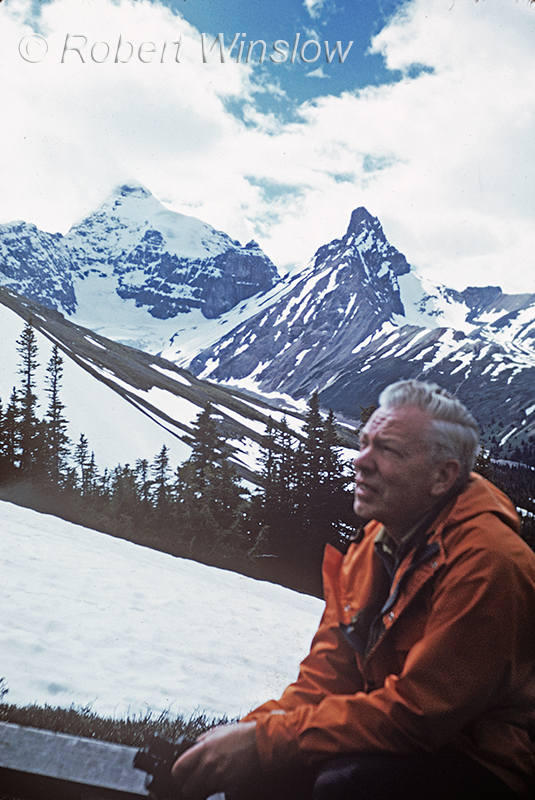
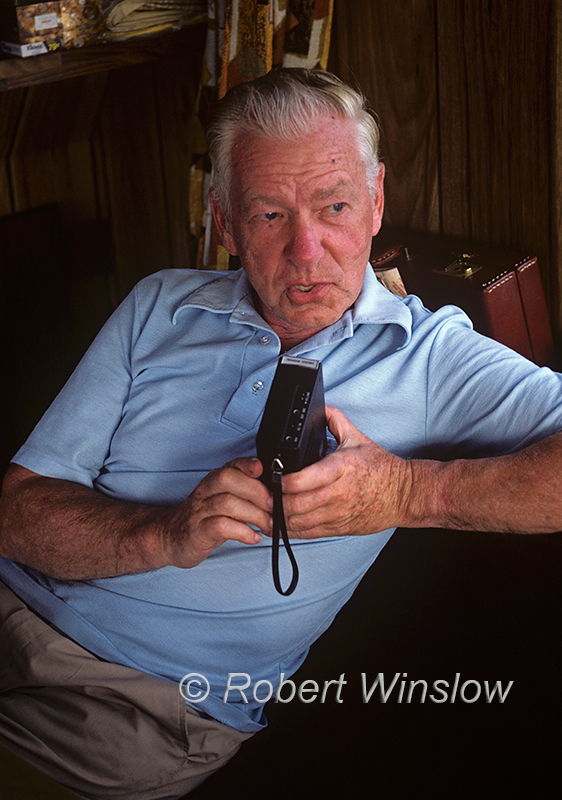
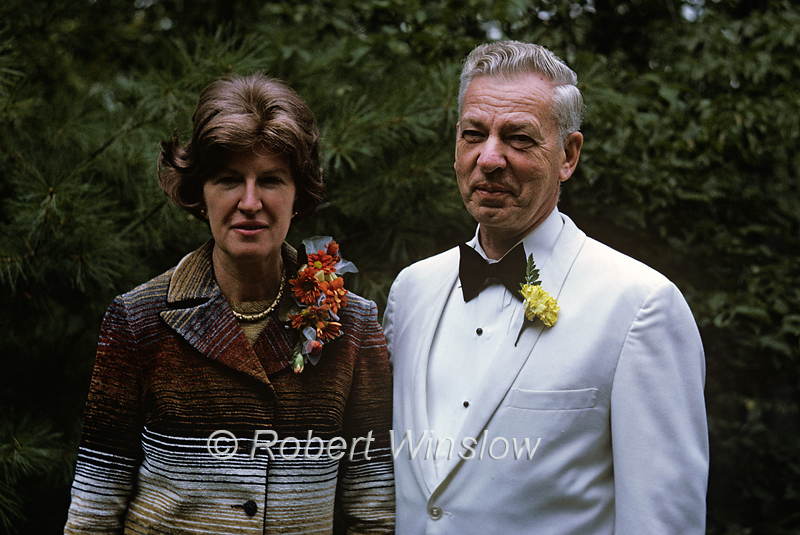
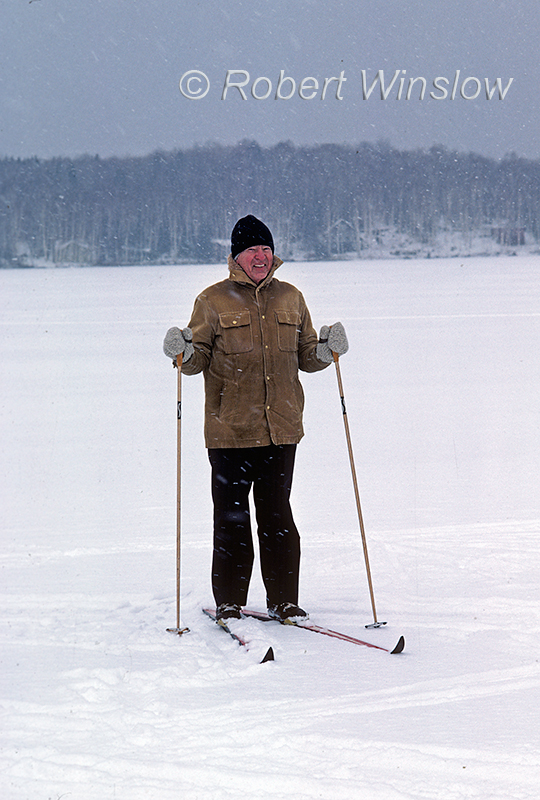
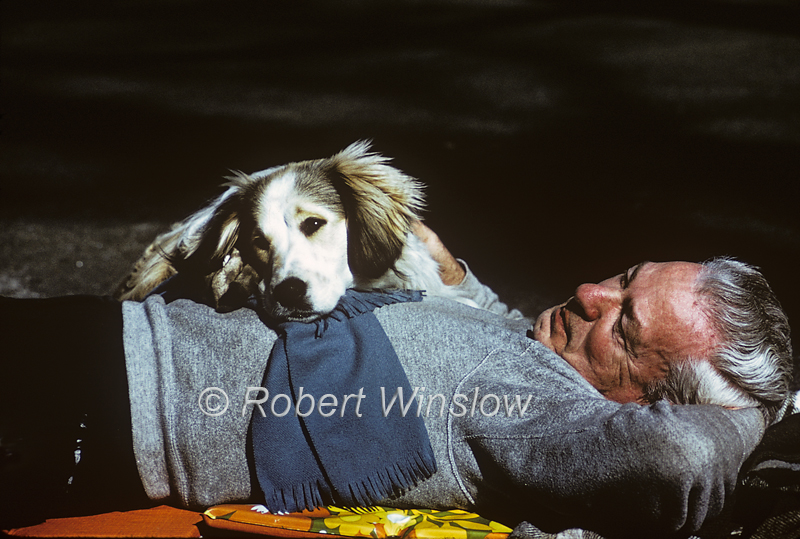
My Father was Born 100 Years Ago Today


Roger Winslow
Roger Winslow

My Father was born 100 years ago today. Physicist. Electrical Engineer. Husband. Father. World traveler.


Where ever he lived he always volunteered to help in his community in a variety of ways – from serving on boards, testifying at hearings, to helping set up tables and changing lightbulbs. He was always willing to help. His workshop was always a place where he would help fix things and make things for his family, friends and neighbors. When they wheeled Dad into his Hospice room on a stretcher one of the fluorescent lights was flickering. With a grin on his face he told the nurse “I can fix that for you”.

Roger Winslow
Roger Winslow


Not many people are aware that soon after his retirement, my Mother and Father sponsored a family from Laos and brought them to this country. They helped the family find jobs and housing. They helped them in every aspect of adjusting to life in a new country. Dad even taught them how to drive. I am very proud of both of my parents for sacrificing their time, money and energy to help a family in need on the other side of the world. In one small concrete very personal way they made this planet a better place to live because of what they have done.


Roger Winslow
Roger Winslow

Anne Morrow Lindbergh once wrote, “To give without any reward, or notice, has a special quality of its own.” Dad was a giver his whole life and even afterward. Soon after he died his corneas were donated so that two people were able to see.

Roger Winslow
Roger Winslow


When he first heard that he had cancer, thinking first of others , he said to my Mother, sister and me, “I have the easy job, you will have the hard job.”

Roger Winslow
Roger Winslow


My Father always taught tolerance, respect for another point of view and compassion for others.

He had an inquiring creative mind and a smart sense of humor. We are all profoundly grateful for his long productive rich life and the special quality by which he touch us all.

Early Morning Visitor

An early morning visitor stopped by our home on the hill today..

“Every morning was a cheerful invitation to make my life of equal simplicity, and I may say innocence, with Nature herself.” ~ Henry David Thoreau

“I think “soul-life” means to me living an authentic life and slowing down, being more attentive, improving the quality of our listening, living closer to the bone and being connected to a place that allows us to be connected to our souls. I think it’s what we’re all hungry for, and we don’t even know what we are missing.” – Terry Tempest Williams

Mule Deer Buck 7271bW1WM
Male Mule Deer Buck, Odocoileus hemionus, La Plata County, Colorado, USA, North America

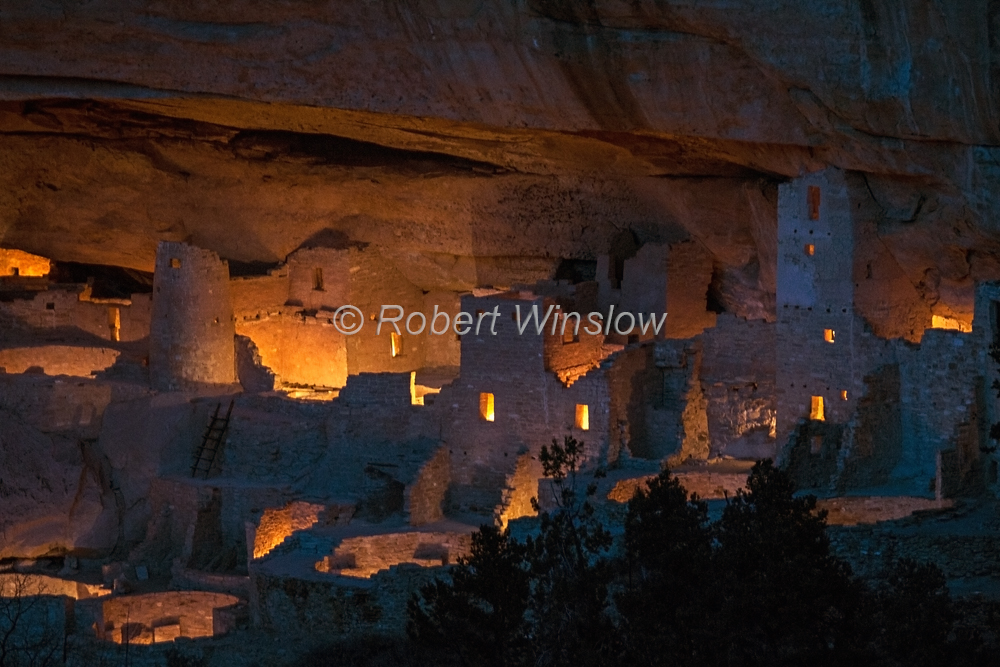
Cliff Palace Illumination

Cliff Palace Illulmination 0066W1WM


Mesa Verde National Park kicked  off the National Park Service Centennial with the illumination of Cliff Palace on Wednesday, Dec. 9th.

To my knowledge, there have only been two “illuminations” of the famous cliff dwelling at Mesa Verde National Park.  The first was done in 2006.

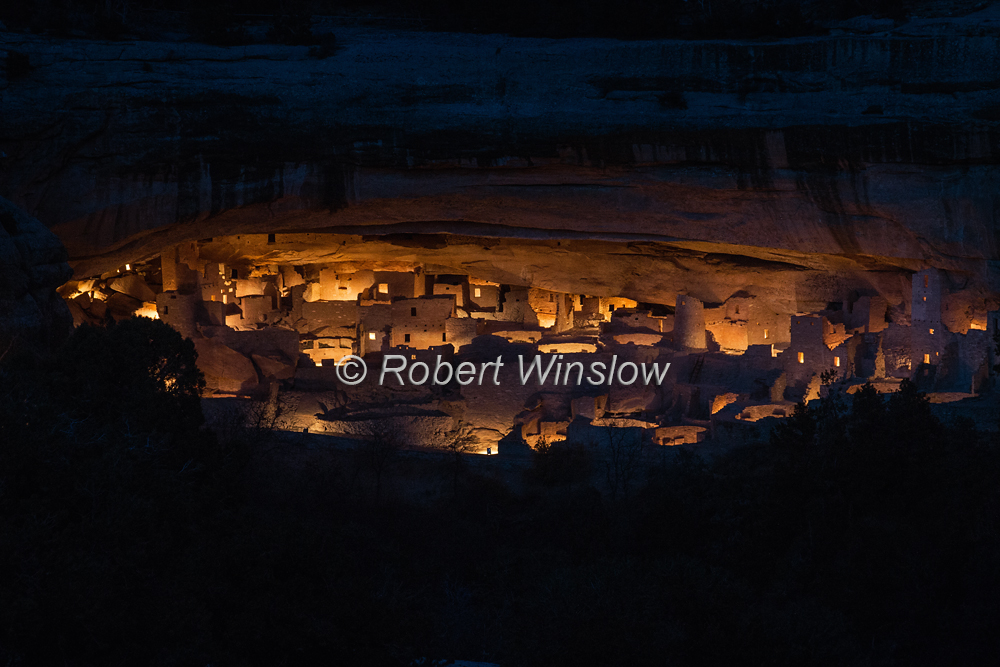
Cliff Palace Illumination 7235W1WM

The weather was fairly warm.  When Marilyn and I arrive about an hour and a half before the lighting was to take place, every possible tripod spot was already taken.  Thanks to some nice folks at one end, I was able to squeeze in to the endless chain of tripod legs and camera bags.

Cliff Palace Illuminatoin 0089W1WM
Cliff Palace Illumination, Mesa Verde National Park, World Heritage Site, Colorado, USA, North America

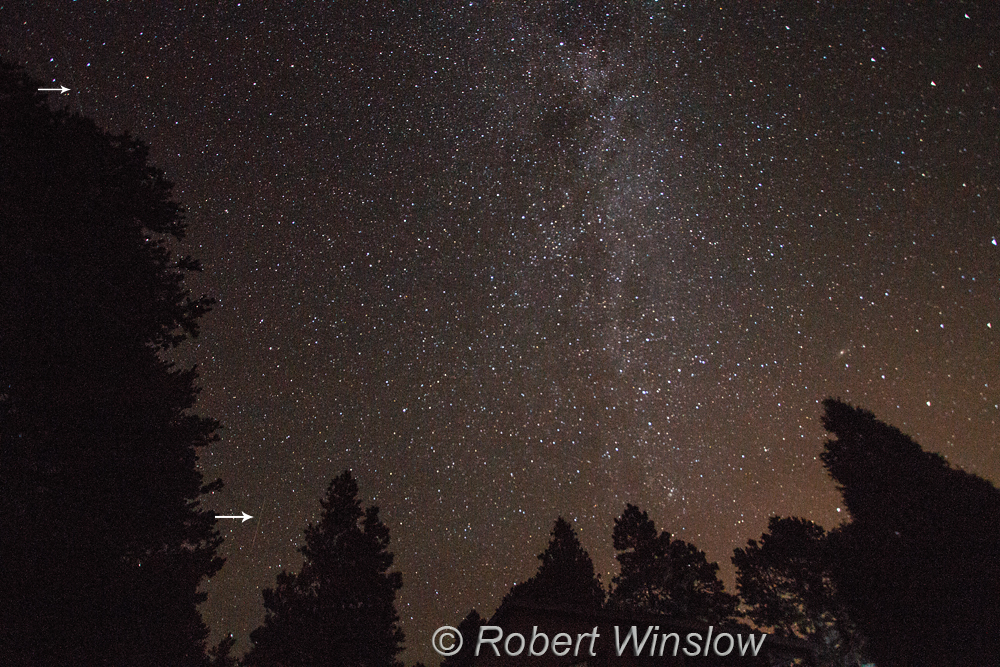
Perseids Meteor Shower 2015

Last night was the height of the Perseids meteor shower. In an attempt to try some nighttime photography in the hopes of recording some meteors I started out at10:45 PM and stayed out until about 12:20 AM. It would have probably been better if I had gone out a bit later as there were not that many meteors. I did see a few good bright ones, but my camera was not pointed in their direction except once.

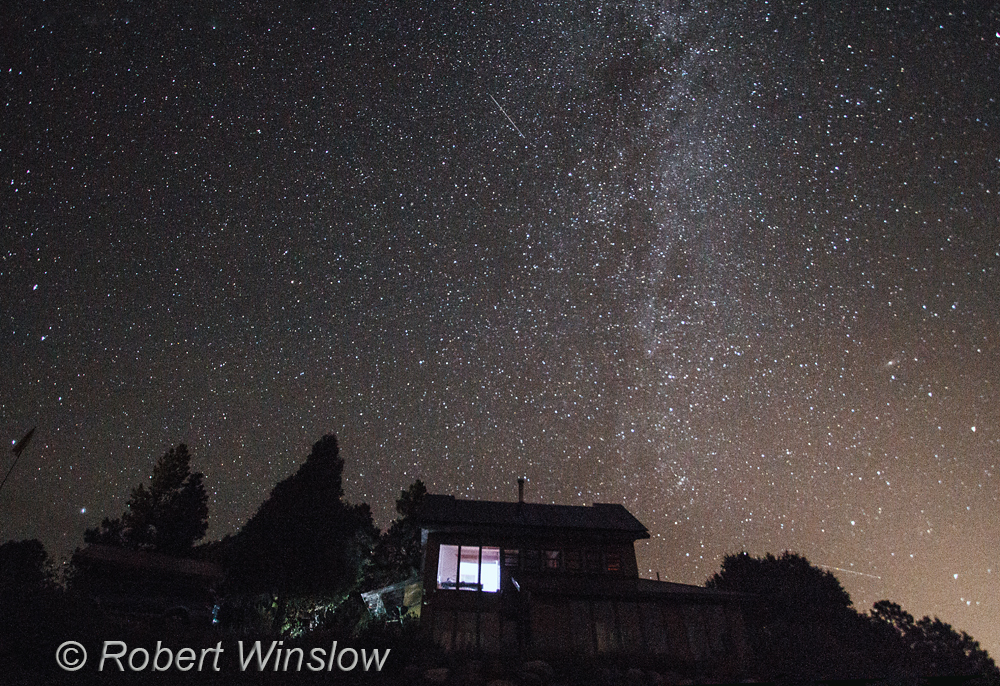
Perseids Meteor Shower, La Plata County, Colorado, USA, North America

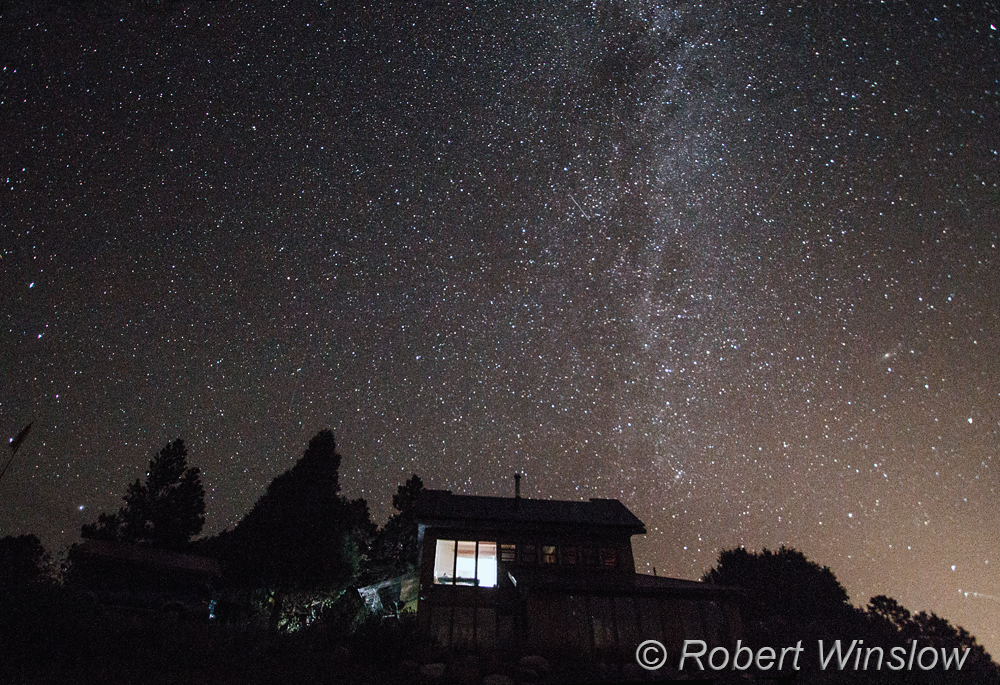
Upon examining the photos this afternoon, I was able to find a few small faint meteors in several frames.

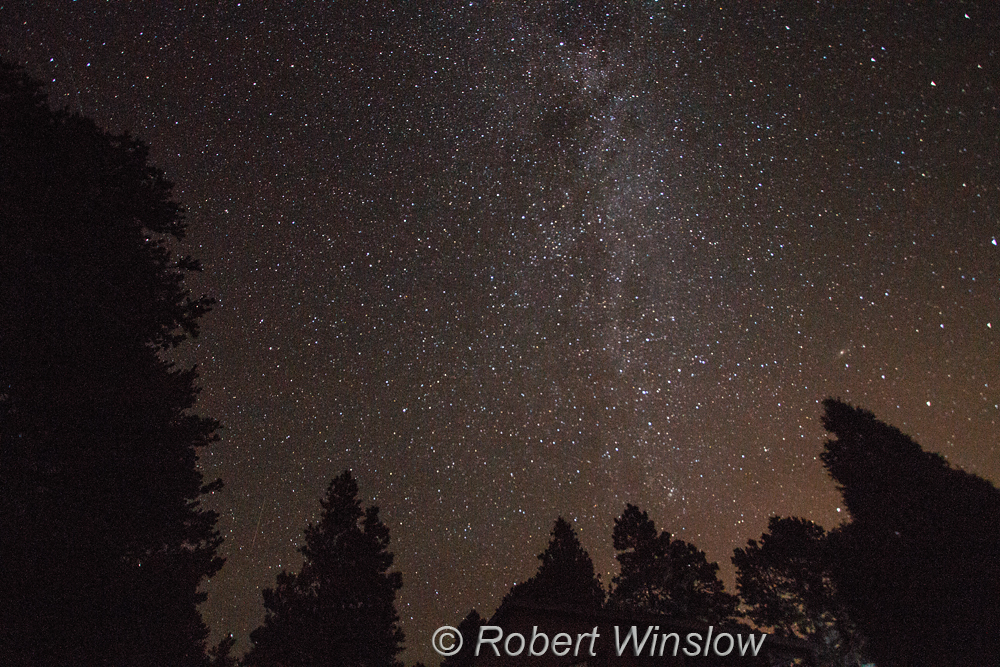
There are no meteors in this photo, but nice to look at.

 Click on the photos on the left to make them larger.  See if you can find the meteor(s). Then click on the photos on the right to see an arrow pointing to the meteor(s)


Mallards Swimming in the Animas River Four Days after a Toxic Spill

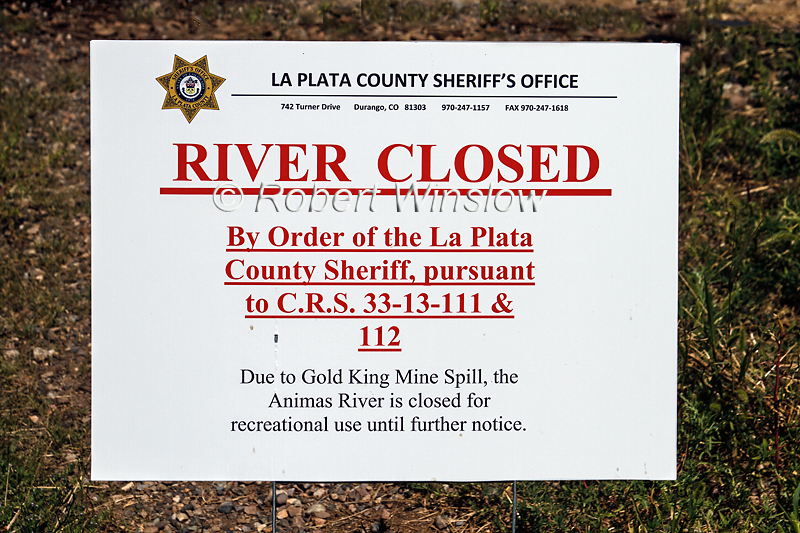
River Closed Sign, Animas River, Durango, Colorado, USA, North America

For those of you who don’t know – on Wednesday 05 August, there was a horrible toxic spill of wastewater from an abandoned mine above Silverton. The EPA was doing an environmental assessment and accidentally caused a breach of a containment dam. An estimated three million gallons of orange sludge flowed into Cement Creek, which then flowed into the Animas River. The sludge is reported to contain high levels of heavy metals including copper, zinc, cadmium and arsenic.

This is a major catastrophe which could affect the health of the river for years.

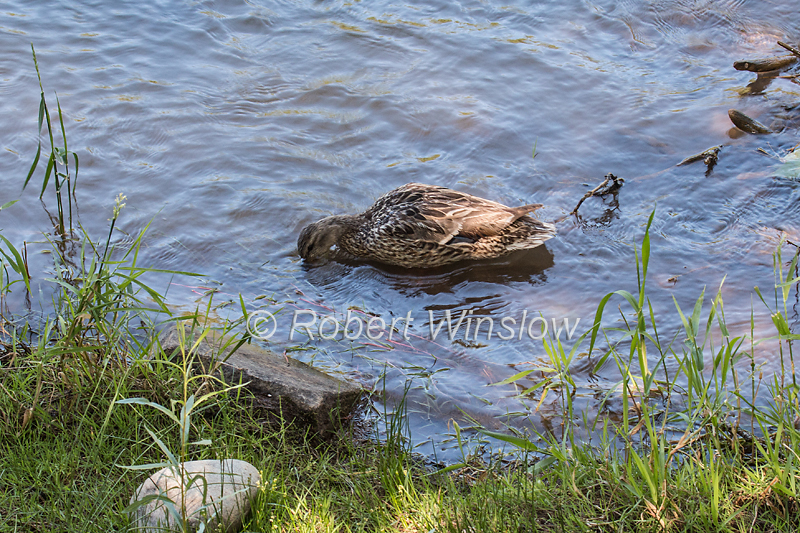
On Sunday morning I did a short walk above and below Rotary Park. I went looking for any signs of water fowl in the Animas River. The only evidence I saw were two Mallards just downstream from the Main Avenue bridge. There is a small fresh water seep coming into the river below the Animas Crossing condos.

A pair of Mallard Duck swiming in the polluted Animas River, August 09, 2015

A pair of Mallard Duck swiming in the polluted Animas River, August 09, 2015

The Mallards hung out mostly near the riverbank but one actually swan across to the East side of the river and was rooting around under water for some food.

Mallard Duck swimming in the Animas River, Sunday August 09, 2015
Mallard Duck swimming in the Animas River, Sunday August 09, 201

The water in the last photo actually looks bluer than it actually was. The first day, Thursday, that the spill arrived in Durango, the color of the water was much more of a mustard color.  Check out the Durango Herald for coverage, videos and photos.

Mallard Duck looking for food on the bottom of the Animas River, Sunday August 09, 2015